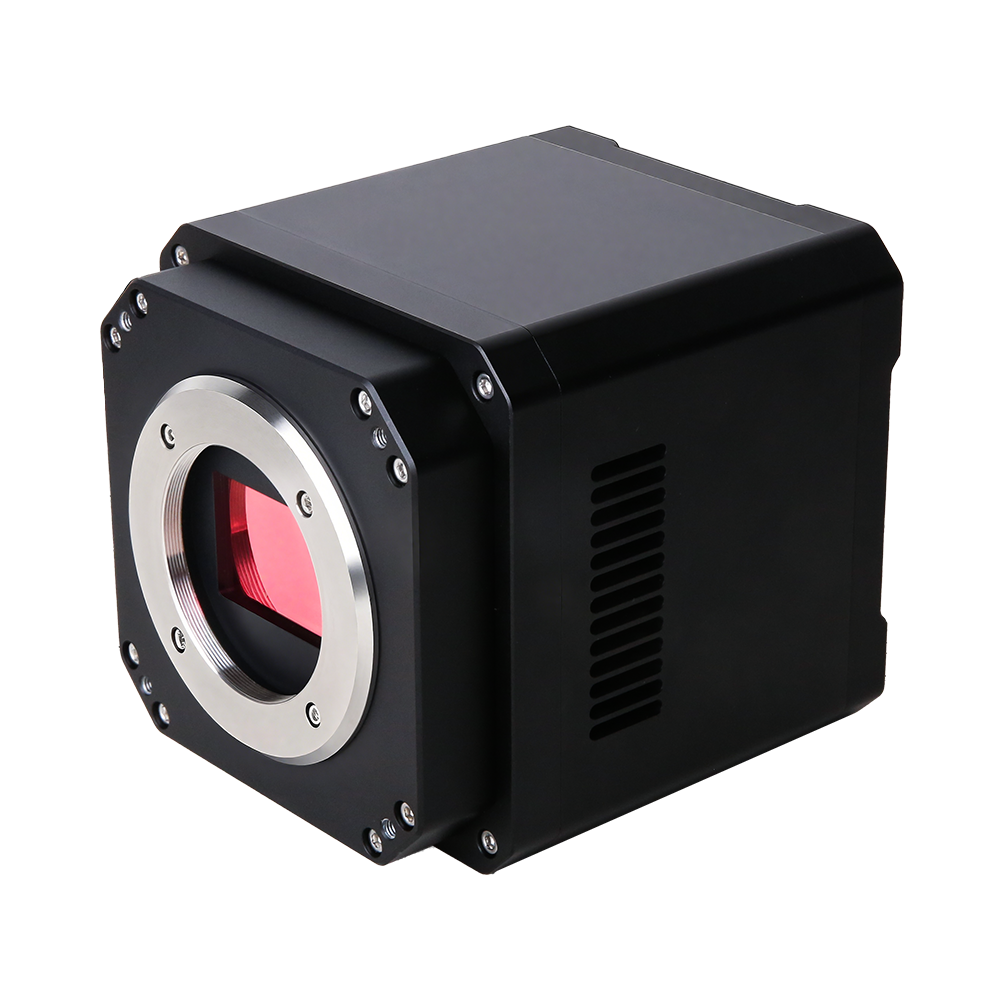
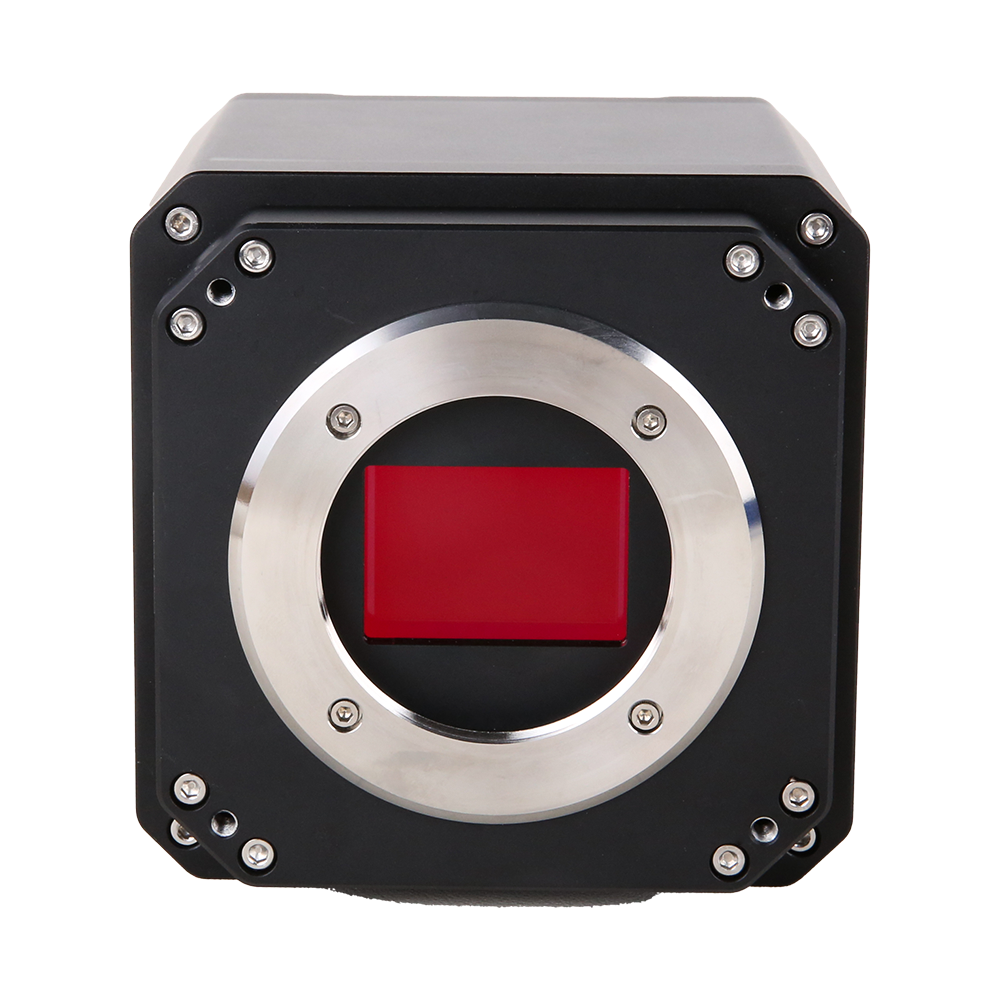
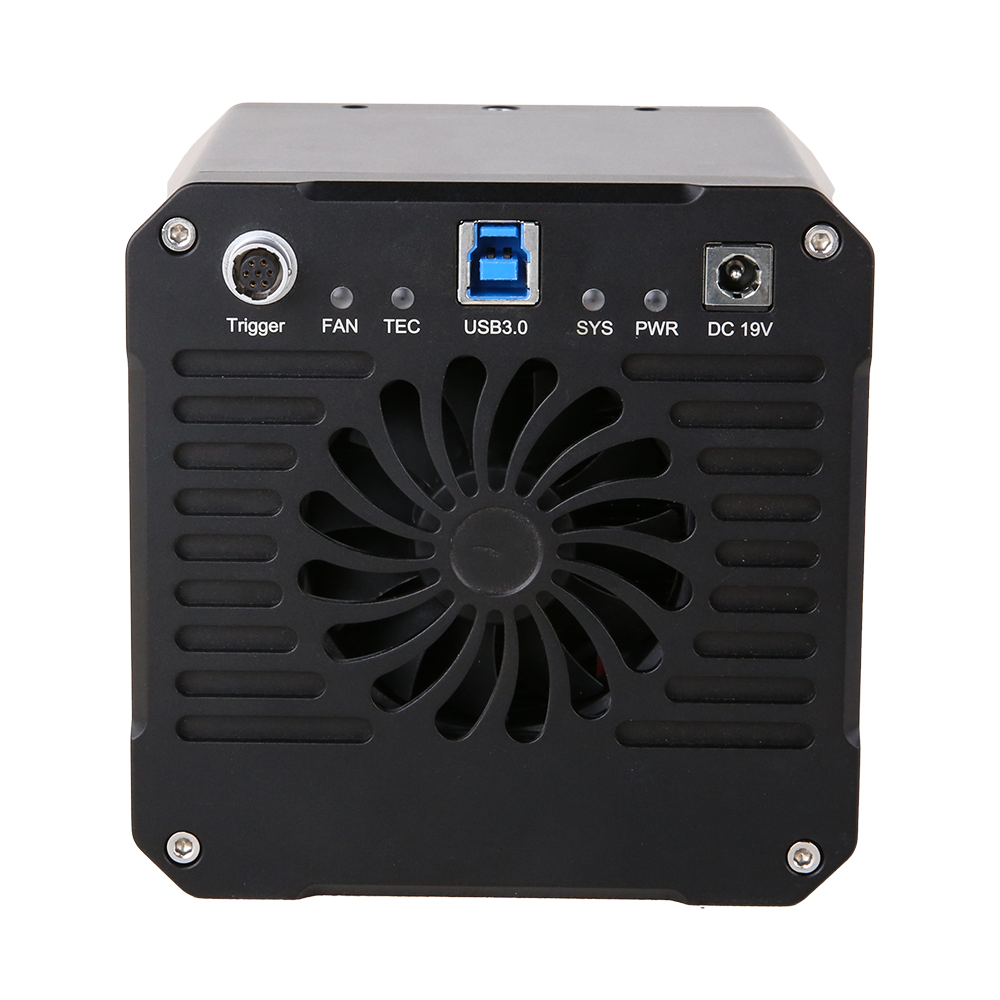
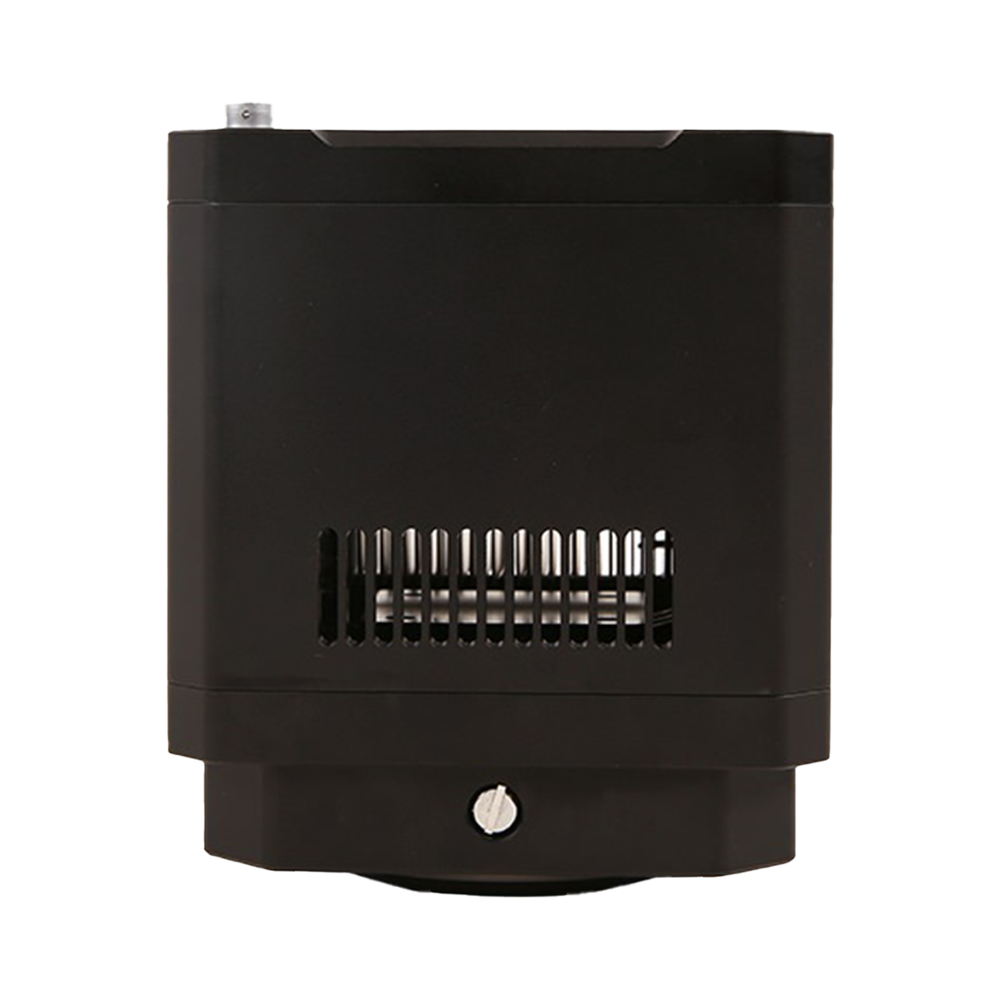
MAX24AC 科学相机
产品介绍
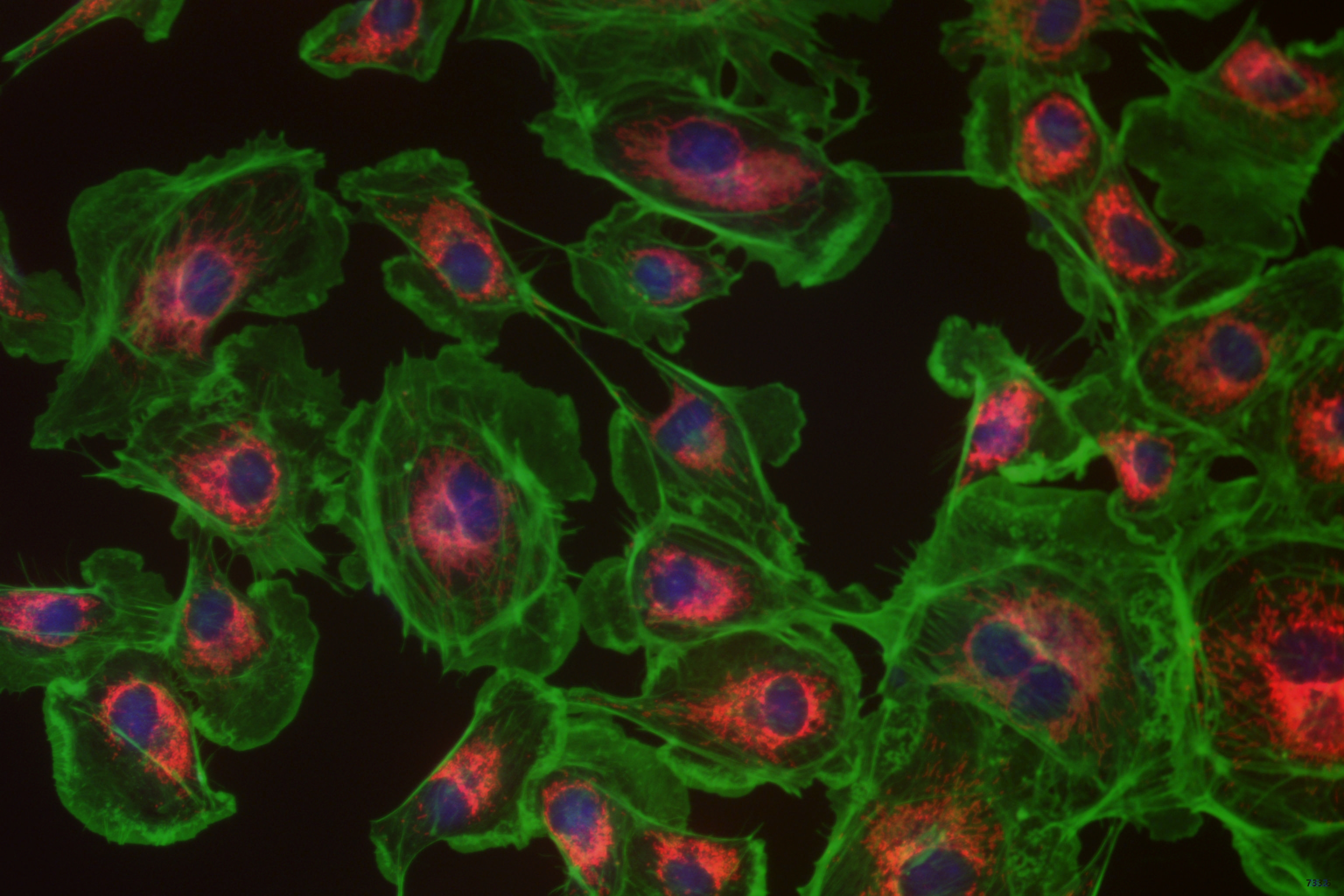
24MP 全画幅彩色相机(Sony IMX410),像元 5.94 µm,USB3.0 传输,支持 8/14-bit 输出与多分辨率帧率。内置 TEC 制冷(典型 ΔT≈40 °C)与防结雾结构,适合荧光显微、成像测量与工业检测等高信噪/长曝光场景。
产品特点
- 传感器:Sony IMX410,24MP(彩色,RS)
- 分辨率:6064×4040;像元:5.94 µm;多模式帧率
- 靶面:36.02 × 24.00 mm;对角线 43.28 mm(2.71")
- 接口:USB3.0;8/14-bit 输出
- TEC 制冷(典型 ΔT≈40 °C),防结雾结构
- 自由运行/软硬触发;支持多机同步(依机型)
- 图像功能:ROI、Binning、方向翻转等(依机型)
- 内置缓存(依机型),保障长时间采集稳定性
- 曝光时间:0.1 ms ~ 1000 s(见规格)
- 采样平均:1×1 / 2×2 / 3×3(见规格)
- 软件:ToupView/ToupLite;提供跨平台 SDK
产品详情
| 规格参数 | |
| 型号 | MAX24AC |
| 传感器 | IMX410 (C,RS) |
| 快门类型 | 卷帘快门 |
| 色彩类型 | 彩色 |
| 分辨率 | 24M (6064×4040) |
| 传感器尺寸 | 36.02 mm × 24.00 mm |
| 传感器对角线 | 2.7" (43.27 mm) |
| 像素尺寸 | 5.94 µm × 5.94 µm |
| 性能参数 | |
| 帧率 | 15.3 fps@6064×4040(14-bit); 41 fps@3024×2012; 114 fps@2016×1342 |
| 曝光时间范围 | 0.1ms~1000s |
| 位深 | 8-bit / 14-bit |
| 动态范围 | 87.3 dB |
| 灵敏度 | 573mV @ 1/30s; 0.04mV @ 1/30s |
| 接口参数 | |
| GPIO | 1路光耦隔离输入,1路光耦隔离输出,2路非隔离输入输出口 |
| 镜头接口 | M52 接口 |
| 数据接口 | USB3.0 |
| 电源供电 | USB3.0接口供电 / DC19V供电 |
| 物理参数 | |
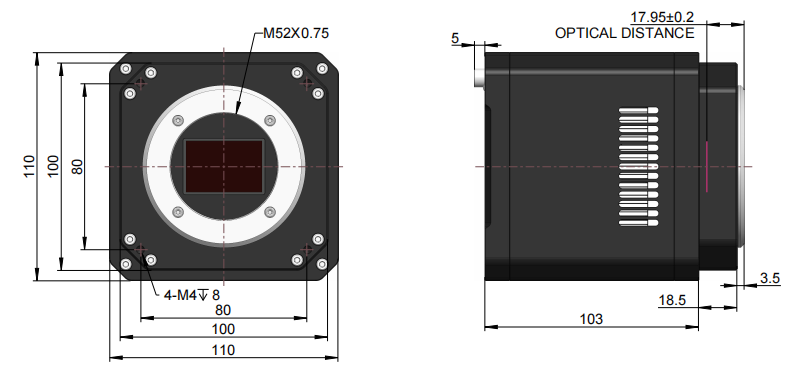
| 外形尺寸 | 110 mm × 110 mm × 121.5 mm |
| 重量 | 1.7 kg |
| 环境参数 | |
| 工作温度 | -10°C ~ +50°C |
| 工作湿度 | 20%~80%(无冷凝) |
| 存储温度 | -30°C ~ +70°C |
| 存储湿度 | 20%~80%(无冷凝) |
| 其他参数 | |
| 操作系统 | Windows/Linux/macOS/Android 多平台 SDK(原生 C/C++、C#/VB.NET、Python、Java、DirectShow、Twain 等) |
| 认证 | CE/FCC |
产品概述
MAX24AC 是一款搭载 IMX410 (C,RS) 背照式 sCMOS 图像传感器的科学级制冷相机,具有以下特征:
- 高分辨率成像:24M (6064×4040) 分辨率,5.94 µm × 5.94 µm 像元尺寸,靶面尺寸为 36.02 mm × 24.00 mm
- 快门设计:采用卷帘快门设计,支持黑白成像,适用于荧光成像、光谱分析、基因测序等科研场景
- 高速数据传输:支持 USB3.0 高速数据接口,最大帧率可达 15.3 fps@6064×4040(14-bit); 41 fps@3024×2012; 114 fps@2016×1342,数据输出格式涵盖 8-bit / 14-bit
- 优异动态范围:动态范围最高可达 87.3 dB,灵敏度为 573mV @ 1/30s; 0.04mV @ 1/30s
- 制冷系统:内置制冷系统,可将温度降低至环境以下 TBD,有效降低暗电流
- 丰富接口:支持 GPIO 接口,镜头接口为标准 M52 接口 接口
- 紧凑设计:整机尺寸为 110 mm × 110 mm × 121.5 mm,重量约为 1.7 kg,供电为 USB3.0接口供电 / DC19V供电
- 全平台支持:支持 Windows/Linux/macOS/Android 多平台 SDK(原生 C/C++、C#/VB.NET、Python、Java、DirectShow、Twain 等) 系统,配套 ToupView 软件及跨平台 SDK,支持 C/C++、C#、Python 等主流开发语言
核心性能指标
帧率
15.3 fps@6064×4040(14-bit); 41 fps@3024×2012; 114 fps@2016×1342
分辨率
24M (6064×4040)
动态范围
87.3 dB
科学成像特性
背照式传感器
采用背照式 sCMOS 传感器,量子效率更高,特别适合微弱光成像应用
制冷降噪
内置制冷系统有效降低暗电流和噪声,提升图像质量和信噪比
高灵敏度
灵敏度达到 573mV @ 1/30s; 0.04mV @ 1/30s,满足科学成像的高精度要求
灵活控制
支持ROI、Binning、触发控制等功能,适应不同科研需求
MAX24AC 相机凭借其卓越的科学成像性能、稳定的制冷系统和丰富的接口配置,是科研院所、医疗机构和高端工业应用的理想选择,能够满足各种精密成像和分析需求。
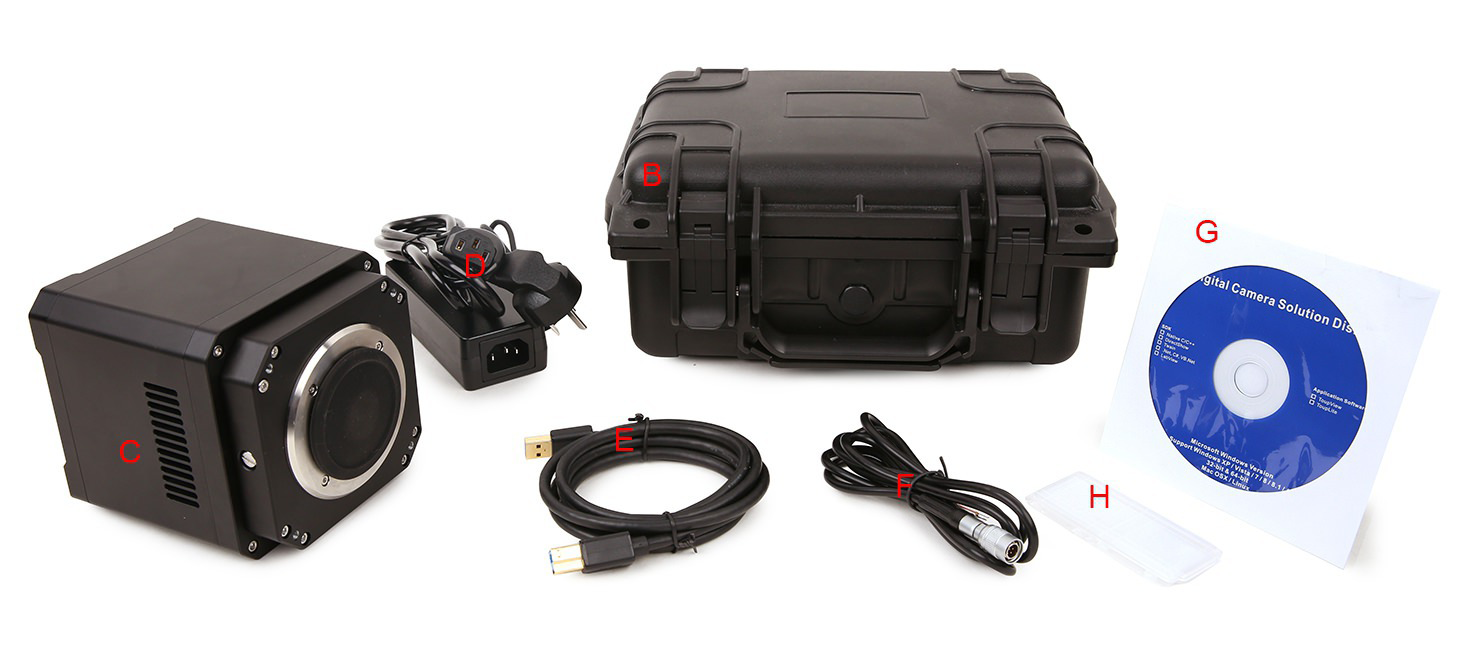
包装清单 #
当前型号 MAX24AC 对应包装清单(USB3 制冷)
- 相机整机(MAX 系列 USB3 · 制冷)
- 电源适配器(输入 AC 100–240 V,50/60 Hz;输出以随箱铭牌为准)
- I/O 线缆(7-Pin 线缆或延长线缆)
- USB 3.0 数据线
- 镜头(选配:M72 / M52 / M42 / C 接口)
产品尺寸 #
当前型号 MAX24AC 对应尺寸图(MAX62 / MAX24)
常见问题解答
了解更多关于科学级CMOS相机的专业知识
- 超低读出噪声:sCMOS 读出噪声接近 1e⁻,远优于传统 CCD
- 高帧率:并行读出架构支持高达100fps或更高的帧速
- 宽动态范围:可同时成像亮暗区域,动态范围可达上万比一
- 大视野和高分辨率:适合高分辨率大视野成像需求
EMCCD 更适合极弱光或长曝光场合。
sCMOS 在高分辨率、高帧率且需要低噪声的应用中性价比更高。
产品深度介绍
sCMOS传感器架构
每个像素配备独立放大器和柱级ADC,可并行读出,实现高速、高信噪比成像。双增益通道与双ADC设计进一步提升动态范围和灵敏度。
低噪声 + 宽动态
典型 sCMOS 噪声 <2 e⁻(30fps),动态范围可达50,000:1,分别远超传统CCD。
快速读出与多用途
并行读出架构支持高帧率 (>100fps),适合高速事件捕获,如细胞运动、荧光寿命、等离子体变化等。
微弱光成像能力
背照式 sCMOS QE 可达 >95%,在UV至近红外范围表现出色,同步具备低固定纹噪、冷却可低至 –30 °C 用于天文观测等。
应用场景与系统价值
适合于荧光显微、天文成像、冷原子研究、X 射线成像、材料检测、工业显微等多个科研和行业领域,具有高灵敏度、高精度和高适应性的系统优势。